
A marketplace service for buying and selling any home
A marketplace service for buying and selling any home


03
How It Differs from Traditional Transactions
The self-sell model, where sellers handle tasks that agents traditionally performed, can require more effort from the seller.
On the other hand, it offers major advantages in cost and in the satisfaction of controlling the transaction yourself.
What Are Traditional Real-Estate Transactions?
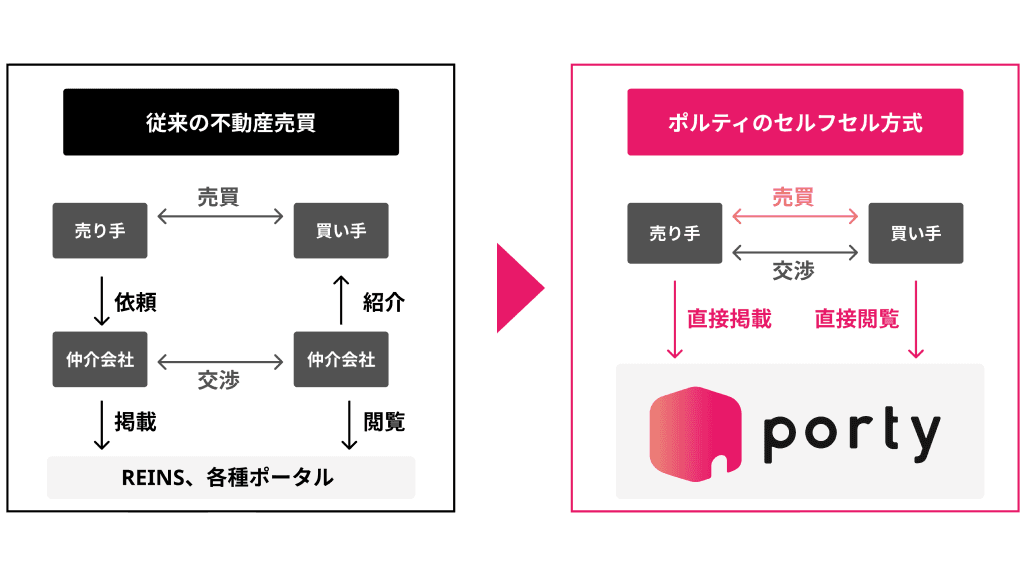
In current real-estate transactions, it is common for both the seller and the buyer to have real-estate agents representing them as the deal moves forward.
The seller-side agent gathers information about the property, such as land area, rights, and building condition, posts the listing on agent-only systems, responds to inquiries, arranges viewings, and negotiates the price.
The buyer-side agent starts by introducing properties that match the buyer's desired conditions, then asks the seller side questions on behalf of the buyer and handles price negotiations for properties the buyer is interested in.
When agents are involved on both sides, the transaction process becomes more complex.
Issues with Traditional Transactions
Traditional real-estate transactions involving agents have several issues.
Because multiple agents are involved, the overall picture of the transaction becomes harder to see, and sellers may not clearly understand how their property is being marketed.
The progress of the transaction can depend heavily on the ability and motivation of the assigned representative.
For some properties, agents may not actively promote the listing for business reasons, and the property may receive very little exposure to buyers. Sellers lose selling opportunities, and buyers lose the chance to find good properties.
Properties That Are Hard to Sell
Low-Price Properties
The compensation a real-estate agent can receive is capped based on the property price.
However, the work required before closing does not decrease much just because the price is low, so low-price properties tend to be given lower priority.
For buyers, these properties can be a chance to find rare listings and hidden value.
Properties Where Buyers Are Hard to Find
Properties in areas with low population and limited housing demand, land with unusual shapes that are difficult to use, and other special-case properties often have uncertain selling prospects and may be avoided.
Properties Sellers Want to Sell Slowly
Compared with properties whose owners want to sell immediately, listings where the seller wants to wait for the right buyer or test the market without being sure about selling may not close even after significant effort, making agents less likely to act aggressively.
High-Risk Properties
Very old buildings or properties with unregistered portions may lead to trouble after closing.
If the agent's explanation is insufficient, liability issues can arise, so some agents may decline to handle these properties.
Because agents are involved on both the seller and buyer sides, information can take time to travel. Since the parties do not communicate directly, replies to inquiries may be delayed and smooth communication can be difficult.
In an industry that handles many properties at once, listing formats are often standardized for efficiency, and there is a tendency to aim for quick transactions.
As a result, sellers' wishes about sale conditions and price may not be reflected well, or they may be encouraged to list or close under conditions that differ from what they wanted.